One Colour at a Time: Making Sense of Single-Pigment Acrylics
There is a quiet satisfaction in a paint rack that looks like a library rather than a sweet shop. Single-pigment acrylics are not a new religion, and they will not paint the miniature for you. But they do make certain things easier: mixing clean greens, glazing without chalky edges, and understanding why a red goes muddy when you add white. This is less a shopping list and more a way of reading the paint you already own.
What Single Pigment Actually Means
A single-pigment paint uses one colourant, identified by a Colour Index code such as PB29 for ultramarine or PR122 for quinacridone magenta. The binder, mediums and additives still vary, so two single-pigment paints can behave differently. Many excellent miniature paints are mixtures, and that is fine. The point is predictability. When you mix two single pigments, you know roughly what you are combining. When you mix two pre-mixed colours, you are mixing several pigments at once and hoping for the best.
Why It Matters on a Small Figure
Miniatures are small, so muddiness shows. A clean purple from ultramarine and magenta looks different from a purple made by stirring red into blue. Single pigments also glaze better. A phthalo blue glaze can shift a colour without leaving a milky film. A single yellow can tint a flesh tone without turning it green. This is colour theory in practice: warm and cool primaries, complementary shadows, and transparent layers. You do not need a degree. You need to know what is in the bottle.
Read the Rack You Already Have
Before buying anything, look at the labels and manufacturer charts. Many paints are single pigment but do not shout about it. Vallejo Model Color, AK Interactive, Scale75, Kimera Kolors, Warcolours and Two Thin Coats all publish pigment information online for at least part of their ranges. UK retailers such as Element Games, Wayland Games, Goblin Gaming, Firestorm Games and Hobbycraft stock different lines. Check the colour index, not the name. Ultramarine is usually PB29; phthalo blue is likely PB15; quinacridone magenta is PR122. Some names are marketing; the code is the truth.
The Swatch Test You Can Do Tonight
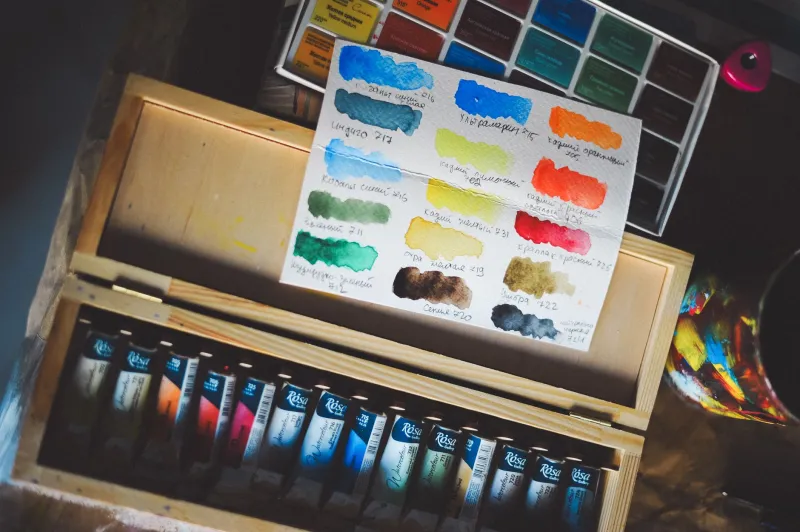
You need an old base or a sheet of white plasticard, a black marker, a brush and a little patience. Paint a thin stripe of each colour over white and over black. Let it dry. Then paint a 1:1 mix of two colours beside it. Add a 1:4 tint with white. Label each swatch with the paint name and pigment code. Look at them under daylight, not just a desk lamp. A single-pigment yellow will tint cleanly; a mixed yellow may turn greenish or grey. A phthalo blue will overpower almost anything, so test it at 1:10. Photograph the swatches for reference. This one evening tells you more than any buying guide.
A Sensible UK Shopping List
You do not need all of these. A useful core might include titanium white PW6, ivory or carbon black, ultramarine blue PB29, phthalo blue PB15, quinacridone magenta PR122, a bright yellow such as hansa yellow PY74, yellow ochre PY43, burnt umber PBr7, pyrrole red PR254 and phthalo green PG7. Kimera Kolors sets are popular for single-pigment mixing; Vallejo and AK offer individual colours; Warcolours and Scale75 are available from UK stockists. Buy one or two at a time and swatch them. The aim is not a complete set; it is a palette you understand.
Mixing and Glazing With Fewer Bottles
Start with two primaries and white. Mix a purple, then a green, then an orange. Keep the mixes simple and write down the ratios. For glazing, thin paint with water or medium until it is translucent and build up layers. Single pigments are more forgiving here because they do not separate into unexpected colours. Use a hair dryer on cool between layers. If a mix goes wrong, do not add more paint to rescue it; start again with less. A limited palette of single pigments can cover most of a figure and teach you more than a rack of ready-made shades.
The best paint rack is the one you understand. Grey matter is full of potential, but real pigment behaves in predictable ways. Learn a handful of codes, swatch what you own, and buy the next bottle because you know why you need it. That is a quieter kind of hobby shopping, and a much more useful one.