The Rucksack Studio: Painting in the Gaps of an Ordinary Week
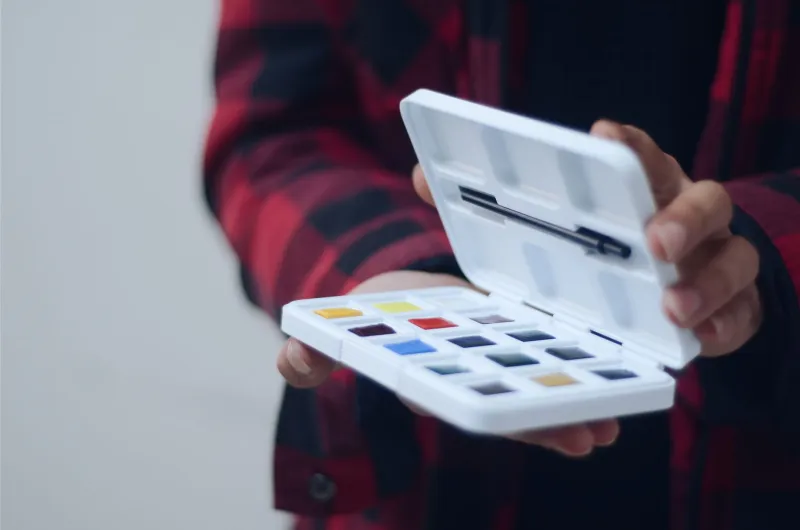
There is a particular kind of hour that belongs to nobody. It's the twenty minutes between locking the office door behind you and the train doors opening, the forty-minute lunch you eat at your desk because the sandwich queue was ridiculous, the half-hour waiting for a child to finish swimming. Most of us scroll through it. Some of us — a small, quiet tribe — open a rucksack and paint a belt buckle.
The travel painting kit has been around for as long as people have been painting tiny things, but most of them are worse than useless. They leak, they rattle, they demand a table the size of a dining table, and they make you look like the sort of person who might get paint on the upholstery. A genuinely good grab-and-go setup is a different proposition. It needs to survive being dropped, unpack in under thirty seconds, and leave no trace when the tannoy crackles into life.
Start with the box, not the brushes
Most guides start with the models. Ignore them. The box makes or breaks the kit, and the best ones are usually found in places with nothing to do with wargaming. Really Useful Boxes — the 0.3 litre and 1.2 litre sizes especially — are cheap, transparent, clip shut firmly and stack in a rucksack without warping. Hobbyzone's modular MDF trays are lovely if you want compartments, but they're heavier and less forgiving when you drop them on a platform. The dark horse is a fishing tackle box: the sort you'd buy from an angling shop for a tenner, with a dozen adjustable dividers. It won't look hobby-adjacent, and it will outlast fancier options.
Whatever you choose, size it against the surface you'll actually use. A train table is roughly the size of a paperback. A café table is bigger but usually occupied. A lap tray — a cheap wooden one with a lip, the kind sold in garden centres — is the great equaliser. It gives you a flat, contained workspace that sits on your knees and catches the inevitable spill.
Brushes need armour
A size 0 sable is a delicate thing, and the bottom of a bag is not a delicate place. Rigid plastic brush tubes are the obvious answer and worth the couple of quid. A roll-up brush mat is softer on the bristles but adds bulk. A decent middle ground is a hard pencil case from any stationer, with a strip of non-slip matting cut to fit the bottom so the brushes don't rattle. Travelling with a single workhorse brush? A length of aquarium tubing with a slit cut down one side holds it rigid and costs about 50p.
Bring fewer brushes than you think. One base brush, one detail brush and a cheap synthetic for mixing is plenty. The rest can stay at home; the more you pack, the more time you'll spend unpacking it.
Choose paints that don't mind being shaken
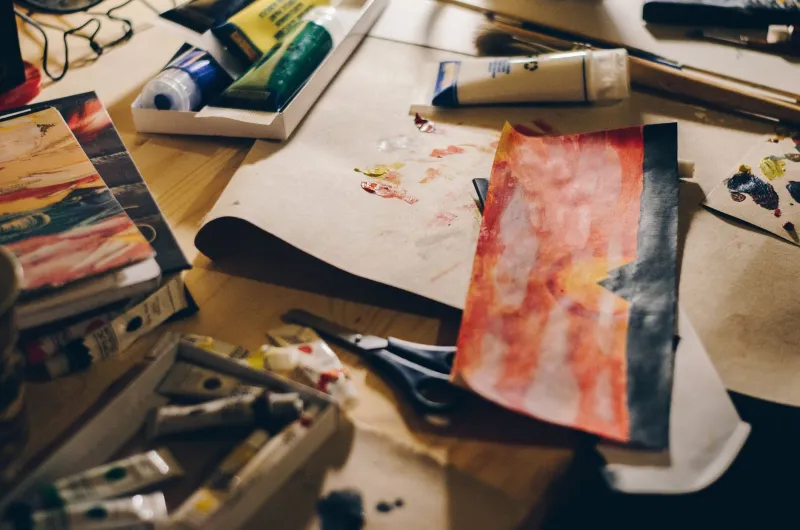
Public spaces are not the place for enamels, oils or anything with a solvent smell. Acrylics are the obvious answer, and dropper bottles beat pots for travelling: they don't spill when knocked, they decant into smaller vessels when you want to go lighter still, and you can see how much is left. A limited palette of six or seven colours covers most figures — a dark, a light, a mid-tone flesh, a couple of accents and a wash. Vallejo Game Colour, Army Painter Fanatic and Two Thin Coats all travel well. Contrast and speed paints are especially useful because they cut down the number of layers you need, and therefore the number of times you have to rummage in a bag on a moving train.
Decant your wash. A full pot of brown ink in a rucksack is a small, sticky catastrophe waiting to happen. A 10ml dropper bottle is a better friend.
Water without weeping
The simplest fix for the water problem is not to have a water pot at all. A water brush pen — the sort sold for watercolour sketching — holds enough for a decent session and cannot spill. If you prefer a pot, choose one with a screw lid and a gasket. A small Tupperware container with a folded J-cloth in the bottom makes a serviceable wet palette, and the lid means it travels without leaking.
Light, because train lighting is a war crime
Carriage lighting is designed to show you the stains on the upholstery, not the inside of a cloak. A USB clip lamp — the kind sold for reading in bed — is the difference between a productive hour and a frustrating one. Buy one with a flexible neck and a warm or neutral setting; cold blue LEDs will turn your carefully mixed flesh tone into something that looks like an unwell ghost. A small head torch works if you're somewhere you can wear one without looking like a caver.
The etiquette question
Painting in public isn't antisocial. Painting in public badly is. The unspoken rules are straightforward: keep your footprint to the width of your tray, don't shake bottles aggressively, don't varnish, don't spray, don't wield a scalpel on a moving train, and pack down to nothing when the carriage starts filling up. Headphones — even ones playing nothing — signal that you're absorbed rather than available for a chat. If someone asks what you're doing, answer briefly and warmly. If they ask to have a go, politely decline. You are not running a workshop.
The final rule is the one nobody tells you: treat every seat as if the person next to you is about to ask you to move your elbows. You'll be surprised how rarely they do.
The ten-minute rule
The biggest obstacle isn't equipment, it's expectation. You will not paint a regiment between Leeds and Sheffield in forty minutes. You will paint one boot, or one face, or one sequence of highlights on a cloak. Treat that as the win and the kit becomes genuinely useful. Ten minutes of basecoating is ten minutes you weren't going to get otherwise. The rucksack studio isn't a replacement for the desk; it's what stops the grey pile growing while you're doing something else.