Dry Shelf, Steady Hands: A Storage Plan for Miniatures in a Damp UK Flat
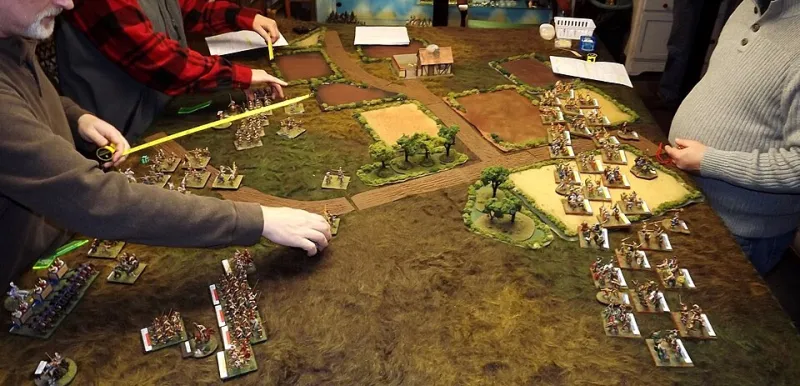
Photo: Allan Wright, CC BY-SA 4.0, via Wikimedia Commons
There is a particular kind of British damp that does not announce itself. It does not blow in through a window or drip from the ceiling. It simply waits in the corner of the spare room, in the cupboard under the stairs, in the cold patch behind the bookshelf, and quietly makes its presence known through a faint smell and a curling base. For miniature painters, that is the enemy. Not clumsiness, not cats, not the dreaded shelf collapse. Damp.
Sooner or later, every grey pile of potential needs a home. The question is not whether you can fit another Really Useful Box on the shelf. It is whether the box, the tray and the shelf are actually doing your figures any favours. Here is a practical storage plan for UK homes where space is tight, the weather is moody and the heating goes on only when absolutely necessary.
Start with the room, not the box
Before buying a single sheet of steel or a roll of foam, look at where the figures will live. External walls are colder, and cold surfaces attract condensation. Lofts swing between freezing and baking. Sheds and garages are basically miniature saunas with spiders. Conservatories are worse. A cupboard in the middle of the flat, away from radiators and windows, is usually a safer bet than a display shelf above a draughty bay window.
If your only option is a damp-prone room, a small dehumidifier or a couple of refillable silica gel packs can make a real difference. They are not magic, and they will not save a soaked cardboard box, but they take the edge off. Check them monthly. A damp flat is not a museum, and pretending otherwise leads to mould on the bases and a nasty surprise when you open the lid.
Foam trays: soft landing, hidden traps
Foam is the old reliable. Cut-out trays cradle figures, stop them rattling together and make club-night packing feel reassuringly simple. For delicate models with spindly parts, foam still has a place. But foam is not automatically safe. Cheap foam can shed, and some types hold moisture against a figure like a damp flannel. If a tray has been sitting in a cold cupboard for months, give it a good look before trusting it with a finished warband.
The bigger issue is fit. A figure crammed into a compartment that is slightly too small will bend under pressure. A figure rattling around in one that is too large will chip. Foam works best when the cut-outs are close but not tight, and when the tray itself sits flat rather than being wedged into a box that bows when stacked. Label the trays, too. Future you will not remember which compartment holds the delicate standard bearer.
Magnets: the grown-up biscuit tin
Magnetic basing has quietly become the default for a lot of painters, and for good reason. A steel sheet glued into a high-street storage box, plus a magnet under each base, gives you a secure, modular system that is easy to expand. Figures stay upright, you can see what you have, and there is no foam rubbing against fresh varnish. It is also much easier to pull out one model without disturbing the rest.
Use neodymium magnets, but match the strength to the job. A tiny magnet under a plastic base is fine for a skirmish figure. A metal-heavy centrepiece needs more hold, and possibly a second magnet. Always check polarity before gluing. There is no shame in admitting you glued a whole regiment the wrong way round; there is only the quiet satisfaction of prying them off and starting again.
For transport, a magnetic box is excellent. For long-term storage in a damp flat, it is not a sealed vault. Moisture can still creep in when the lid is open, and steel can rust if the air is constantly wet. A small silica pack in the corner of the box is cheap insurance.
High-street boxes: measure twice, buy once
You do not need specialist hobby storage to keep figures safe. Really Useful Boxes, IKEA Samla tubs and the sturdy sort of craft boxes sold in The Range or B&M can all do the job. The trick is to measure the internal dimensions, not the external ones, and to think about how the box will be stacked. A box that flexes under weight will press on foam trays or send magnetised figures sliding.
Clear boxes are useful because you can see what is inside without opening them. Opaque boxes are better if sunlight is an issue, since UV will fade paint over time. Either way, avoid cardboard for long-term storage. Cardboard drinks moisture, softens and can transfer stains. If you must use a cardboard outer box, keep the figures in a plastic inner box and add a silica pack.
Club night is not a removal van
Transport is where good storage earns its keep. A magnetised box with a lid is ideal for a club night: figures stay put, and you can carry the whole force in one hand. Foam trays are better for awkward models that do not sit flat. Whichever you use, do not overfill. A box that closes with a satisfying click is fine. A box that needs a knee to shut is a box that is already damaging something inside.
Keep a small repair kit in your bag: superglue, a few spare bases and a soft brush. A chipped sword at the club is annoying. A chipped sword that has been rattling around loose in a bag for a week is a small tragedy.
Do not build a museum
The best storage system is the one you actually use. If every figure is wrapped in tissue, boxed in foam, sealed with tape and stored behind three other boxes, you will stop getting them out. Painted figures are meant to be seen, played with and enjoyed. Keep your favourite warband within reach. Store the rest sensibly, but do not confuse protection with imprisonment.
A dry shelf, a sturdy box and a bit of common sense will see your grey matter through the damp months. The biscuit tin can stay in the kitchen, where it belongs.