The Name Tag Effect: One A5 Card, One Figure, One Reason to Pick Up the Brush
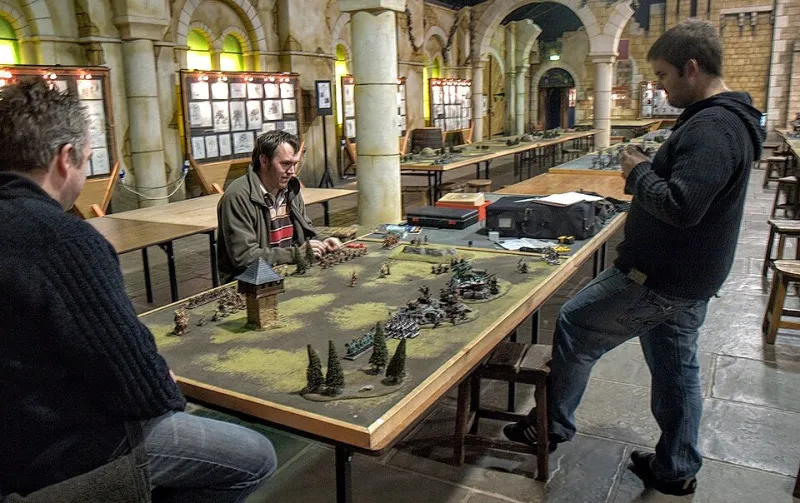
Photo: Jesusbella, CC BY-SA 4.0, via Wikimedia Commons
Every warband has one: the figure that went into primer back in the spring and has been quietly collecting dust ever since. The sculpt is fine. The mould lines are long gone. The problem is that nobody has ever asked who this person is, so there has never been an obvious reason to finish them.
Give that miniature a name, a motive, a flaw and a single hook for the tabletop, and something shifts. Not because a backstory makes a model better, but because it makes the model yours. The whole thing fits on one side of an A5 card. It takes about ten minutes and costs roughly the price of a bag of crisps.
Why Anonymous Figures Stay Grey
Painters are not short of techniques. We are short of reasons. A grey pile is rarely a skills problem, because most of us can put paint on a figure well enough to enjoy it on the table. What stalls the brush is indifference. Ten unidentified soldier number fours in a row all need the same belt, the same boots and the same face, and there is nothing to hang a decision on.
A name changes the questions. What colour are the boots? Well, what does she do for a living? What is that chip in the shoulder pad? Something he would rather not talk about. Small, throwaway answers, but they turn a painting checklist into a set of choices.
Four Boxes and Nothing Else
The method is deliberately stingy. One card, four headings, and a hard cap on how much you write.
Name. Not a title, not a rank. A name somebody would actually shout across a courtyard. Maud Alder. Tam Beck. Old Pell. If you are stuck, pinch a surname from a road sign or a biscuit tin, because nobody at the club will check.
Motive. One sentence, present tense. What are they trying to get, keep or get back? Maud wants the boat her husband lost. Tam wants to be paid on time. Old Pell wants everyone to stop asking about the eye.
Flaw. Something that will cost them at the wrong moment. A temper, a debt, a bad knee, an unshakeable belief that they can talk their way out of anything. This is the bit that makes the tabletop interesting, because flaws lose games in a way that virtues never do.
Hook. One thing that could actually happen in a game. Not a ten-page saga, just a lever the other player can pull. She will not leave a wounded comrade behind. He cannot resist a locked door. They owe a favour to somebody on the other side of the board.
Four lines. That is the whole assignment.
Prompts for the Blank Page
Blank cards are intimidating, so borrow a few questions from the great tradition of writers who cheat. What did this person do before the fighting started, and what do they miss about it? Who did they let down, and what did it cost? What is in their pocket right now that they would not want found? What would make them run? What is the one small luxury they insist on, even on campaign?
Answer one of those and a character usually falls out of it. Answer two and you have a hook.
The A5 Card, Club Night Edition
A pack of A5 record cards from any stationers, a box of cheap plastic wallets, and a tin to keep the lot in. That is the kit. Write one card per figure, sleeve it, and keep the deck with your dice.
At a UK club night in the back room of a pub, the cards earn their keep three ways. The first is the draw: shuffle the deck, deal one card to each player at the start of a game, and that figure becomes the one their force is built around for the evening. The second is the shuffle: swap a card with your opponent before deployment and you have a grudging alliance, a hostage or a traitor without writing a single scenario. The third is the eulogy: when a named figure goes down in a memorable way, flip the card face down and leave it, and next week whoever draws it has to explain what happened next.
None of this needs a rulebook. The cards are not a system, they are a prompt.
Three Rules That Stop It Becoming Homework
The fastest way to kill this is to turn it into an evening's work, so: ten minutes per card, maximum. If the bath is running or the kettle is on, that is enough time. Second, no editing. First idea wins. A strange motive is more useful than a sensible one, and a good player will smooth over the cracks far faster than you can fix them. Third, and most importantly, the cards are disposable. If a story stops being fun after three games, cross it out and write a new one. Nobody is publishing this.
Painting What You Named
The practical payoff arrives at the painting desk. A named figure gets a colour it would not otherwise have: Maud's red boots, Tam's faded work coat, a shoulder pad repainted in a colour that means something. Flaws show up in the model, whether that is a scuffed knee, a bandaged hand or a helmet too big for its owner. Basing becomes easier too, because the place is no longer generic. She is from the coast, so she gets sand and a bit of rusted chain. He is from the city, so he gets cobbles and a crumpled leaflet.
That is the whole trick. You are not writing a novel. You are giving the brush a reason to make one specific decision rather than five identical ones, and a grey figure with one specific decision in front of it gets painted a great deal faster than a grey figure with none.
Start with the one in the corner, the one you keep moving out of the way. Name them tonight, on the back of an envelope if a card is too far away, and see whether the brush behaves differently in the morning.