Elbow Room Only: Five Skirmish Games That Earn Their Place on a Pub Table
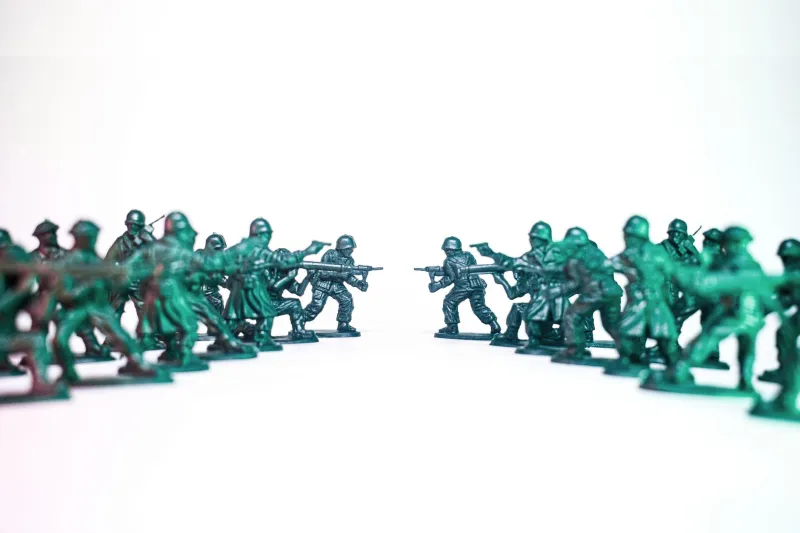
There is a particular kind of optimism that arrives with a packed rucksack and a quiet corner of a British pub. You have a mat, some scenery, a handful of figures and a friend who has agreed to learn a new rule set. Then the table fills up with glasses, someone puts a coat on the bench, and the landlord turns the overhead lights down to a warm amber glow that flatters nobody's paint job.
Pub gaming is not a lesser form of tabletop gaming. It is just a different set of constraints. The best skirmish games for that environment are not necessarily the tightest competitive rules or the most beautiful books. They are the ones that fit beside a pint, travel in a rucksack and let painted figures read clearly at arm's length. With that in mind, here are five picks that behave themselves on a small table — and a few hobby choices that make any of them easier to live with.
The pub test: four things that matter more than the rulebook
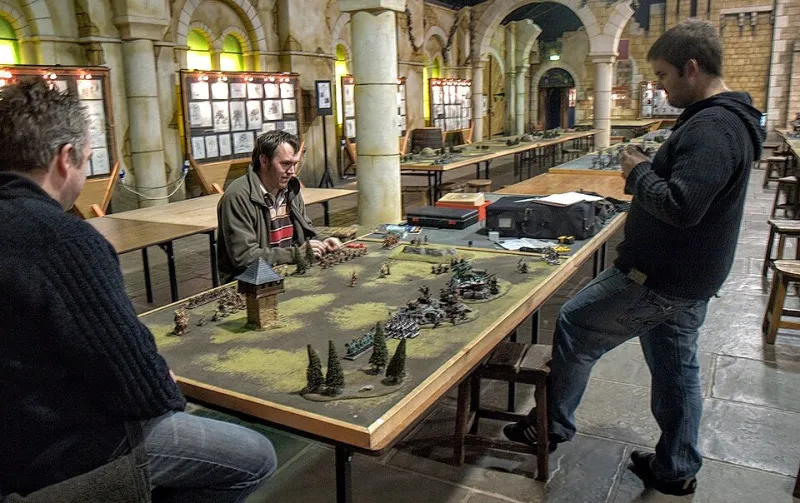
Before naming games, it helps to be honest about what a pub does to a battlefield. First, space. A standard pub table is not a 4x4 board with room for casualty dice and a rules folder. Assume a 2x2 or 3x3 play area, then subtract a pint-glass no-go zone. Second, light. Warm, low and uneven lighting flattens contrast, so dark miniatures on dark bases disappear. Third, transport. If it does not fit in a rucksack with a coat stuffed around it, it will stay at home. Fourth, readability. Your opponent needs to tell which figure is the sergeant and which is the thug from across a cluttered table, not from six inches away.
Those four tests matter more than whether a game has a clever activation system. A brilliant rule set with twenty fragile miniatures and a deck of cards spread across two tables is not a pub game. A simple rule set with eight clear, well-based figures absolutely is.
Five picks that keep their elbows in
Frostgrave
Frostgrave remains the gold standard for small-footprint fantasy skirmish. A warband is usually around ten figures, the board is compact, and the rules are friendly enough to teach between ordering and the first round. The real pub advantage is that the game expects scattered terrain rather than ranked units, so a few ruined walls and a couple of crates do most of the work. Keep the warband to a tight colour palette and the table stays legible even under a low lamp.
Stargrave
If fantasy is not your thing, Stargrave offers the same small-crew rhythm in science-fiction clothing. Crews are similarly modest, the footprint is small and the game rewards scenario play over parking lots of models. For pub use, lean into the scavenger tone: a handful of containers, a flat mat and crew members with strong silhouettes. Avoid spindly antennae and thin rifles if you can. They look wonderful in a display cabinet and terrible in a rucksack.
Space Weirdos
Space Weirdos is the sort of indie rules set that feels made for a crowded table. The model count is tiny, the rules are light, and the whole thing has a scrappy, DIY energy that suits a grey-matter approach to miniatures. It is not a game that demands a dedicated table in a hobby room. It demands a few figures, some dice and an opponent who is happy to improvise. That makes it ideal for a weeknight pub game where the point is the conversation as much as the contest.
Rangers of Shadow Deep
Co-operative skirmish is a great pub option because it removes the awkward pause while one player checks a rule that only matters to their faction. Rangers of Shadow Deep uses a small warband, a compact play area and a scenario-driven structure that keeps the table busy without flooding it. The role-playing-adjacent tone also means a half-painted figure can be pressed into service as a villager, a cultist or a suspiciously well-armed farmer. That flexibility is worth a lot when you are packing light.
Warcry
Warcry earns a place with a caveat. The model count is manageable, the warbands are colourful and the activation system is quick once everyone has played a round. But the game can sprawl if you bring every piece of scenery in the box. For pub play, pack flat ruins, a couple of vertical pieces and nothing that needs a spirit level to assemble. Treat the scenery as a frame for the fight, not a diorama. Done that way, it fits a small table and looks brilliant under warm light.
Painting for a dimly lit table
The pub is not a photography studio, and that should change how you paint a skirmish warband. Start with value contrast. If the whole figure is mid-grey and mid-brown, it will become a smudge at arm's length. Pick one bright accent — a red sash, a yellow shoulder pad, a pale hood — and let the rest sit back. Paint the base rims in a consistent colour so you can tell whose figures are whose when the table gets crowded. A clean rim also makes a figure look deliberate even if the face is only three brushstrokes deep.
Matte varnish is your friend. Glossy miniatures catch every overhead light and turn into tiny mirrors. Magnetise the bases if you can, because a metal tin in a rucksack is far kinder than a foam tray that sheds crumbs onto the pub carpet. And avoid fragile parts. A broken sword is a modelling opportunity at home; at the pub it is a five-minute delay while everyone crawls under the table.
Packing the rucksack
A pub kit should be boringly practical. A neoprene mat rolls smaller than a rigid board. A small dice tray keeps rolls from scattering into someone's crisps. Tokens live in a tin, not a sandwich bag. A slim rules folder or a tablet with a PDF beats a hardback tome when the table is already crowded. If you can carry the whole game in one bag and still have room for a jumper, you have packed it correctly. If you need a trolley, the game is not pub-friendly, however much you love it.
The final call
The best pub skirmish game is the one you will actually play. A compact rule set with eight readable figures will beat a sprawling masterpiece every time when the table is small, the light is low and the next round is due. Choose games that respect the elbow room, paint figures that announce themselves at arm's length, and pack like someone who has to carry the whole thing home again. The grey matter can stay on the sprue; the pint table is for playing.