The Paint Cemetery Report: What Your Finished Pots Say About Your Hobby
Photo: Peter Trimming, CC BY-SA 2.0, via Wikimedia Commons
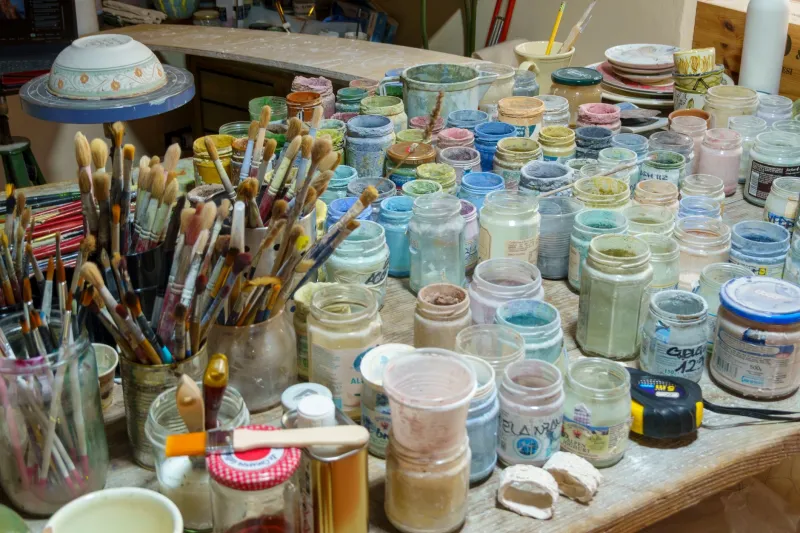
There is a drawer in most hobby rooms that nobody talks about. It holds the dead: pots with cracked lids, bottles with a fossilised ring around the neck, and those sad little tubs you kept meaning to rescue. We tend to treat them as clutter. A better approach is to treat them as evidence. Empty bottles do not lie about what you paint, and neither do the nearly-empty ones. They tell you which colours earned their place on your figures and which ones were bought because a video made them look exciting.
This is not a scolding. It is an audit, and it is best done with a brew nearby and no intention of buying anything new until the evidence is in.
Start With the Bin, Not the Shopping Basket
Gather every empty, dried-up, or almost-finished pot you can find. Do not clean them yet. Sort them into three rough piles: genuinely finished, dried solid before their time, and abandoned with plenty left. Take a photo of the whole grim little collection. It sounds daft, but the picture is useful. It stops you from convincing yourself later that you are nearly out of a colour when you actually have three unopened pots under a different name.
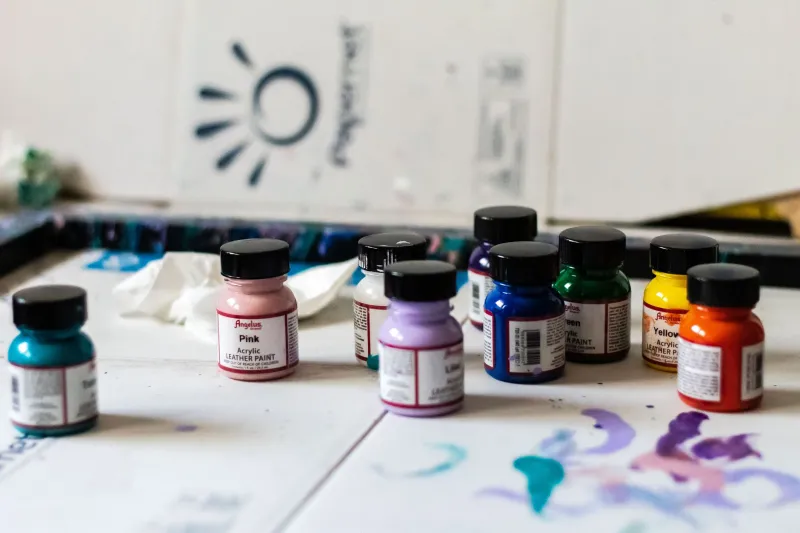
For each pot, note the brand, the colour name, roughly when you bought it if you can remember, and where it came from. A local game shop, a show, an online order, a gift. That last detail matters more than you think. Paints bought in a burst of enthusiasm often tell a different story from the ones you keep replacing without thinking.
Keep a Three-Project Tally
A postmortem is only useful if it leads to a habit. For your next three projects, keep a simple tally. A notebook is fine. A scrap of paper taped inside a cupboard door is also fine. Every time you reach for a colour, make a mark. Do not overthink it, and do not count the times you picked the pot up and put it back down. Count actual use.
After three figures, a squad, or a small warband, look at the marks. The colours that appear on every project are your workhorses. These are the ones worth replacing promptly and possibly keeping a spare of. The colours with one mark are not necessarily bad. They might be special effects, spot colours, or the exact shade that made a single model sing. But they should not be allowed to multiply. The colours with no marks at all need a hard look. If a pot dried out without ever touching a figure, that is not a paint problem. That is a buying problem.
The Duplicate Hidden Under a Different Name
Paint ranges are full of near-identical shades. One brand's bone is another brand's parchment, and a third brand's off-white is suspiciously close to both. If you have been buying by name rather than by role, you probably own duplicates already.
The honest test is a swatch card. Prime a bit of old plasticard or a spare base, then paint a stripe of each suspect colour next to the others. Let it dry properly. Look at it under daylight, not just your painting lamp. In the UK, that means grabbing the ten minutes of useful grey daylight when you can. If two colours are indistinguishable on a figure at arm's length, they are doing the same job. Pick one, use it up, and stop buying the other until it is genuinely needed.
A better system is to label pots by role rather than name. "Infantry leather", "cold metal", "warm bone", "dirty wash". The name on the bottle is marketing. The role is what your army actually needs.
Why Dried Pots Are Still Data
A dried pot can mean three things. You loved the colour and used it to death. You neglected the seal and it punished you. Or you bought it, admired it, and never found a use. Only the first is a good reason to rebuy immediately. The second is a storage lesson. Clean the rim, close the lid properly, and keep pots away from radiators and sunny windowsills. The third is a warning against aspirational shopping.
Nearly-empty pots are the most honest of all. They show you where your brush actually goes. If your favourite brown is down to a smear, that is not a crisis. That is a clear signal to replace it before the next project, rather than waiting until you are mid-basecoat and improvising with something worse.
Build a Lean Palette That Fits Your Table
Use the audit to build a core palette. Not a universal one, and certainly not a forty-colour set chosen by someone else. Yours might be twelve pots. It might be twenty. The point is that every pot has a job you can name.
Start with the colours that cover the bulk of your figures: a base, a shade, and a highlight for the common materials. Add a black, a white, a mid-grey, a decent brown, a flesh tone that suits your usual subjects, a metal, a wash, and a varnish. Keep the specials in a separate box. If you paint mostly grimdark sci-fi, your lean palette will look nothing like a historical painter's. That is the point.
UK-friendly also means realistic. Buy from shops you can actually reach or stockists you trust, and do not chase limited-edition pots unless they fill a genuine gap. A colour that is hard to replace should be a deliberate choice, not an accident. Your palette should fit the figures you finish, not the ones you keep meaning to start.
A Five-Minute Quarterly Review
Once every three months, open the paint drawer and check the evidence again. Wipe the rims, bin the truly dead, and note any colour you have used steadily. It takes five minutes. It saves money, shelf space, and the small irritation of discovering that your favourite leather brown has become a tiny geological formation.
The empty bottles are not a failure. They are a record. Read it honestly, and your next paint purchase will be a lot less speculative and a lot more useful.